A premium cigar is a living thing. From the moment the tobacco is harvested, fermented, and rolled, a slow, complex transformation begins — one that continues for years inside the humidor. The oils deepen, the harshness of young tobacco softens, and the flavours in a well-constructed blend begin to integrate and evolve into something richer and more nuanced than what was originally rolled. This is the art and science of cigar storage and ageing: understanding how to create the right environment for your collection and having the patience to let time do its work.
Why Proper Storage Is Non-Negotiable
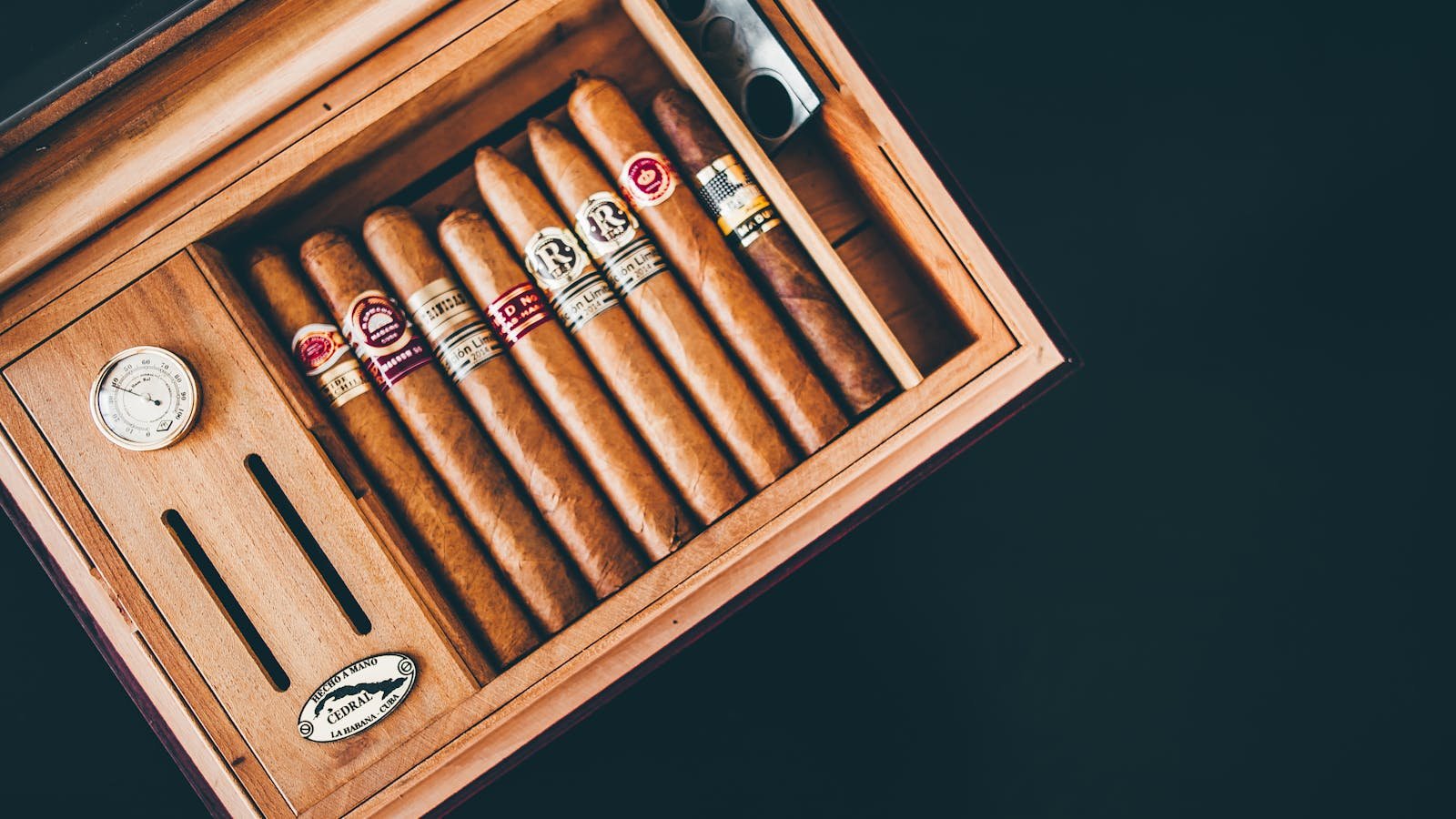
Before we discuss ageing, we must address the fundamental requirement: proper storage. Without it, your cigars are not ageing — they’re deteriorating. The enemies of a premium cigar are inconsistent humidity, extreme temperature, prolonged dryness, tobacco beetles, and mould. A well-maintained humidor eliminates all of these threats and creates a stable microclimate in which your cigars can rest, breathe, and slowly improve.
The investment in a quality humidor is one of the most important decisions a serious collector makes. It is not merely a storage box — it is a controlled environment, and the precision with which you manage it directly determines the quality of what you eventually smoke.
Understanding Humidity: The 70/70 Rule and Beyond
The traditional standard for cigar storage is 70% relative humidity (RH) at 70°F (21°C) — the so-called “70/70” rule. This remains a sensible baseline, but the modern understanding of cigar storage is considerably more nuanced.
Cuban cigars are traditionally stored at higher humidity — 65–70% RH — partly due to their construction. Cuban tobacco can be sensitive to fluctuations, and the bunching technique used in many Cuban factories means the cigars need slightly more moisture to draw well.
New World cigars (Nicaraguan, Honduran, Dominican, and others) are often rolled with slightly drier techniques and are well-suited to storage at 62–65% RH. Many experienced collectors prefer this range because it reduces the risk of mould, slows the draw, promotes a cooler and more even burn, and allows flavours to develop more cleanly over time.
The key insight is consistency. A cigar stored at a stable 63% RH for five years will almost always be in better condition than one that fluctuated between 58% and 72%. Humidity fluctuations cause the tobacco to expand and contract repeatedly, stressing the wrapper, potentially cracking the cap, and disrupting the slow integration of flavours that makes ageing worthwhile.
Temperature: The Often-Overlooked Variable
Temperature is the second critical variable — and the one most frequently ignored by new collectors. The ideal storage temperature for premium cigars is between 16°C and 21°C (60–70°F). Within this range, the slow chemical reactions that improve the tobacco proceed at a measured pace without introducing risk.
Temperatures above 24°C (75°F) are dangerous for two reasons. First, they dramatically accelerate the ageing process in a way that often produces harsh, sharp flavours rather than the desired integration and softening. Second, and more critically, temperatures above 24°C combined with high humidity create ideal conditions for tobacco beetles — tiny insects whose eggs lie dormant inside cigar tobacco and can hatch, destroying an entire collection from within.
If you store cigars in a warm climate or during summer months, investing in a wine cooler or a dedicated cigar cooler (a “coolidor”) is strongly recommended. Temperature stability matters as much as the absolute value — a consistent 18°C is preferable to one that fluctuates between 16°C and 23°C.
Choosing the Right Humidor
Humidors range from small desktop units holding 25–50 cigars to large cabinet models capable of storing thousands. For most collectors, a good desktop humidor of 100–200 cigar capacity is an excellent starting point — large enough to build a meaningful collection, small enough to maintain efficiently.
When selecting a humidor, several factors are critical:
Spanish cedar lining: The interior of any quality humidor should be lined with Spanish cedar (Cedrela odorata). This wood has unique properties: it naturally regulates moisture, repels tobacco beetles with its aromatic oils, and imparts a subtle cedar note to the cigars stored within — a characteristic that many aficionados consider essential to the overall experience of a well-aged cigar. Avoid humidors lined with mahogany or generic softwood; these lack the moisture-regulating properties of Spanish cedar.
Seal quality: The lid should close with a satisfying, airtight seal. A simple test: place a strip of paper in the closed lid and pull it. You should feel resistance. If the paper slides out easily, the seal is inadequate and your humidor will struggle to maintain stable humidity.
Humidification system: The traditional floral foam humidifier is being replaced by more sophisticated options. Boveda packs — two-way humidity control sachets available in a range of percentages — are now considered the gold standard by many collectors. They release or absorb moisture as needed, requiring nothing more than periodic replacement. For larger collections, electronic humidifiers with digital hygrometers offer precise, low-maintenance control.
Hygrometer: A digital hygrometer is essential. The analogue hygrometers included with many budget humidors are notoriously inaccurate. Purchase a quality digital unit and calibrate it using the salt test method before trusting its readings.
Seasoning Your Humidor
Before placing any cigars inside a new humidor, you must season it. A new humidor’s Spanish cedar lining is dry and will aggressively absorb moisture from both your humidification system and your cigars, causing the RH to plummet and potentially damaging your collection.
The correct method: wipe down the interior cedar with a clean, lint-free cloth lightly dampened with distilled water (never tap water, which contains minerals that can cause deposits and affect the cedar). Place a small shot glass or dish of distilled water inside, along with your charged humidifier. Close the lid and leave for 24–48 hours. Check the hygrometer and repeat if the RH has not yet stabilised at your target level. This process typically takes two to four days for a well-made humidor. Only when the cedar has stabilised should you introduce your cigars.
Rotation and Organisation
Cigars in different positions within the humidor experience slightly different conditions — those nearest the humidifier may receive more moisture than those at the far end. Rotating your cigars every few weeks ensures even conditioning throughout the collection. Many collectors organise by brand, vitola, or intended smoking occasion, which also makes rotation systematic rather than arbitrary.
Avoid mixing flavoured or infused cigars with your premium collection. The aromas from flavoured cigars can transfer to natural cigars stored nearby, an irreversible contamination that can ruin years of careful ageing.
Which Cigars Age Well?
Not all cigars benefit equally from ageing. Several characteristics indicate a cigar’s potential for improvement over time:
High ligero content: Ligero is the thick, oily leaf from the top of the tobacco plant — the most slowly maturing, the most flavourful, and the most in need of time. Cigars with a high proportion of ligero in their filler are often harsh when young but extraordinary after three to five years of rest. This is particularly true of Cuban and Nicaraguan production.
Robust construction: A well-constructed cigar with a firm, even roll and a quality wrapper will age far more gracefully than a loosely rolled or imperfectly constructed one. Poorly rolled cigars may not survive long-term ageing without developing draw or burn problems.
Maduro wrappers: Cigars with maduro wrappers — wrappers that have undergone an extended fermentation process — continue to evolve and sweeten with age. The natural sugars and oils in maduro leaves deepen beautifully over time.
Specific lines that reward long ageing include Cohiba Behike (Cuban), Padron 1964 Anniversary Series, Arturo Fuente OpusX, and Liga Privada No. 9. More accessible options that age admirably include Romeo y Julieta Reserva Real and Bolivar Royal Coronas.
How Long Should You Age?
There is no universal answer, but some practical guidelines help:
Cigars often go through a “sick” phase shortly after rolling, particularly those shipped internationally, as they adjust from their production environment. This phase typically lasts two to eight weeks. Resting a newly acquired box for at least a month before smoking will almost always yield a better experience.
For meaningful improvement, a minimum of six months to one year of rest is generally required. Many collectors consider one to three years the sweet spot for medium-to-full-bodied cigars — long enough to integrate and soften, not so long that lighter characteristics begin to fade.
For the most complex, ligero-heavy blends, five to ten years of careful storage can produce transcendent results. The tobacco develops a deep, almost leathery richness, the spice rounds into warmth, and the finish extends to extraordinary length.
The best practice is to purchase multiple examples of the same cigar and smoke one every six to twelve months. This lets you track the evolution of the blend over time and determine your personal preference for its age.
Troubleshooting Common Problems
Mould: White or green fuzzy growth on your cigars is mould — typically the result of excessive humidity combined with insufficient airflow. Remove affected cigars immediately, wipe them gently with a dry cloth, reduce your RH by 3–5%, and increase ventilation by propping the humidor lid slightly for a day or two.
Dry, cracking cigars: If your wrappers are cracking and the tobacco feels brittle, your RH has dropped too low. Re-season your humidor and gradually reintroduce moisture over several days. Never attempt rapid rehydration — shocking a dry cigar with sudden moisture will cause the wrapper to crack and expand unevenly.
Tobacco beetles: Small, round holes and fine powdery tobacco dust inside your humidor are the telltale signs of a beetle infestation. Freeze affected cigars at -10°C for three days (sealed in plastic bags to prevent moisture absorption during the transition), then allow them to return to room temperature gradually. Inspect unaffected cigars carefully before returning them to the cleaned humidor.
The Philosophy of Ageing
Building a collection and ageing cigars requires a particular mindset: the willingness to invest now for a pleasure deferred. It is one of the few remaining pursuits in contemporary life that genuinely rewards patience — the understanding that not everything worth having is immediately available, and that the best things improve with time.
A cigar you set aside today, stored with care in precisely maintained conditions, will greet you years from now as something transformed — richer, rounder, more complete. That anticipation is itself a pleasure, and the eventual smoke carries with it a history of patience and craft that no freshly rolled cigar can replicate.
That is the true reward of the well-managed humidor.